On this page
Telehealth care is available in Arizona, Florida, Illinois, Indiana, Kentucky, Michigan, Nevada, and New York. You must be in your selected state during the visit.
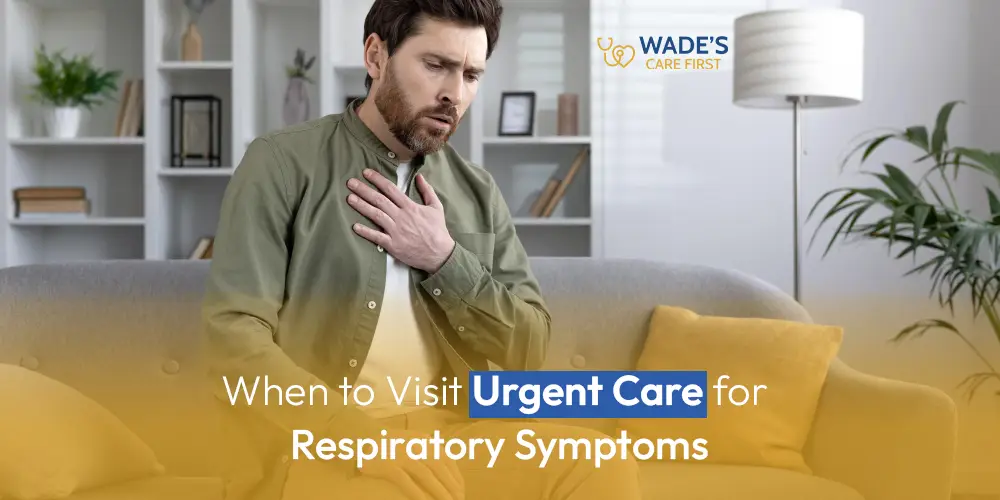
Sometimes it’s hard to know when your cough is indeed just hanging around or if it’s actually asking for help.
And at times, it’s also hard to tell one breathing condition from another.
If you are unsure if now’s the time for urgent care, you aren’t alone.
This blog will help you decide, with simple guidance that puts your peace of mind first.
Some of these signs of breathing issues may be minor, whereas some may reflect a particular condition.
If you’re stuck wondering whether to wait it out or head to urgent care, this guide is here to help.
Common Respiratory Symptoms
Breathing problems can present in many shades.
Some of the typical warning signs to watch for include:
- A cough that hangs around or seems very strong
- The sensation that it is difficult to draw breath
- Chest tightness
- The expiratory wheeze or noisy breathing sound
- Making more mucus than normal
- Sore throat or itching in the throat
- Fever, particularly when it is only a cough or congestion
These symptoms can be caused by pretty much anything and are usually related to the common cold, allergies, or maybe an infection like bronchitis or pneumonia.
This is the reason why it is good to know when to seek additional assistance.
When Should You Visit Urgent Care?
Some respiratory issues may be managed at home by lying down and drinking fluids. However, there are symptoms that you can never overlook.
This is when it is most ideal to be under the watch of a team of medical professionals.
Head to urgent care if you notice:
- Difficulty Breathing
Severe difficulty breathing, a severe allergic reaction, or new concerning chest pain can be an emergency. Call 911 rather than waiting for urgent-care or telehealth scheduling.
It might be something more serious, such as:
- Asthma
- Lung infection
- Severe allergic reaction
See a medical professional to be diagnosed and treated correctly.
- Cough That Won’t Let Up
In case one has experienced a cough for a couple of days and the condition continues to deteriorate, they must visit.
When the cough persists, producing increasing amounts of mucus, or fails to clear up, there is a good chance that there’s something else happening inside of you.
- Chest Pain
New or concerning chest pain with shortness of breath can be an emergency. Call 911 rather than waiting for an urgent-care or video appointment.
- Prolonged coughing from respiratory infections can indeed cause costochondritis (it’s inflammation of the cartilage connecting ribs to the breastbone)
- Chest pain could appear with an infection in the lung; sometimes, it speaks of something more sinister, such as a blood clot.
- High Fever with Chills
A fever, cough, or stuffy chest can all point to something more serious – pneumonia or strep throat.
If you would like to know more about strep, read on about strep throat, how contagious it is and when to get help.
- Wheezing or Whistling When Breathing
The first time one experiences wheezing, one cannot easily dismiss it. It can be an asthma symptom, bronchitis or an irritated airways symptom.
- No Improvement After a Week
Urgent Care can assist you in diagnosing what is going on in case you have been ill for more than a week and have not felt better.
What You Can Expect at Urgent Care
Urgent Care clinics are great if you want friendly, fast help without spending hours in a waiting room. For respiratory symptoms, you might get:
- A check-up and quick exam
- A clinician may arrange a throat swab, other laboratory testing or chest imaging when indicated. These tests require appropriate specimen collection or an imaging facility; they cannot be performed through the video call.
- Medications such as antibiotics (when bacterial infection is suspected), pain relievers (Tylenol, NSAIDs), steroids, mucolytics, and inhalers, when necessary.
A cough or breathing concern may need a video visit, prompt in-person care or emergency treatment, depending on the symptoms. Do not wait for worsening symptoms when breathing is difficult.
Why Getting Help Early Is Important
Most of the time, people figure that a cough or sore throat will just go away on its own. If you wait too long, though, things can get pretty serious.
You might need to head over to the ER, and maybe even stay in the hospital for a bit.
Getting checked early means:
- You get the proper treatment promptly
- The complication risk is reduced
- You’re likely to start feeling better and faster
After all, your health and peace of mind matter.
Wade’s Care First Can Help
We know nobody likes to put life on hold because of an illness.
At Wade’s Care First, rest assured that friendly caregivers listen to you and work to get you back on your feet.
For mild, stable symptoms, ask about an appropriate appointment. For severe breathing difficulty, new concerning chest pain, fainting or rapidly worsening symptoms, seek emergency care.
Book Your Urgent Care Appointment With Us Today
Some respiratory illnesses need testing, follow-up or in-person care. The plan depends on the symptoms and findings.
If you’re in Arizona, Florida, Illinois, Indiana, Kentucky, Michigan, Nevada, and New York and think you may have these symptoms, we can help.
Wade’s Care First makes it simple to get checked, find answers, and feel reassured.
Frequently Asked Questions
Can a video visit help with asthma concerns?
A video visit can help review stable symptoms and ongoing care. An asthma flare may need prompt in-person treatment. Severe breathing difficulty is an emergency.
Should chest pain be assessed through telehealth?
Do not rely on pain severity alone to judge safety. Call 911 for possible heart-attack symptoms, including chest discomfort with shortness of breath, sweating, nausea or faintness. New or unexplained chest pain needs prompt medical assessment.
Can pneumonia be diagnosed by video?
A video visit may identify concerning symptoms, but pneumonia may require an in-person examination, oxygen measurement or imaging. Your provider will direct you to the appropriate setting.
Sources: NHLBI: heart-attack warning signs
Answers connected to this topic.
Can you reassess an illness if my symptoms worsen after a video visit?
Yes, but rapidly worsening or severe symptoms should be evaluated promptly in person rather than waiting for a routine follow-up.
Do I need a test for flu or COVID-19 before an urgent visit?
Not always. We review symptom timing, risk factors and any available home results to determine whether testing or time-sensitive treatment is appropriate.
Can I use telehealth for sick or urgent-care visits?
Yes. Sinus infections, sore throats, UTIs, rashes, pink eye and stomach bugs can often be evaluated by video. Check the scheduler for available appointments, including same-day openings when offered.