On this page
Telehealth care is available in Arizona, Florida, Illinois, Indiana, Kentucky, Michigan, Nevada, and New York. You must be in your selected state during the visit.
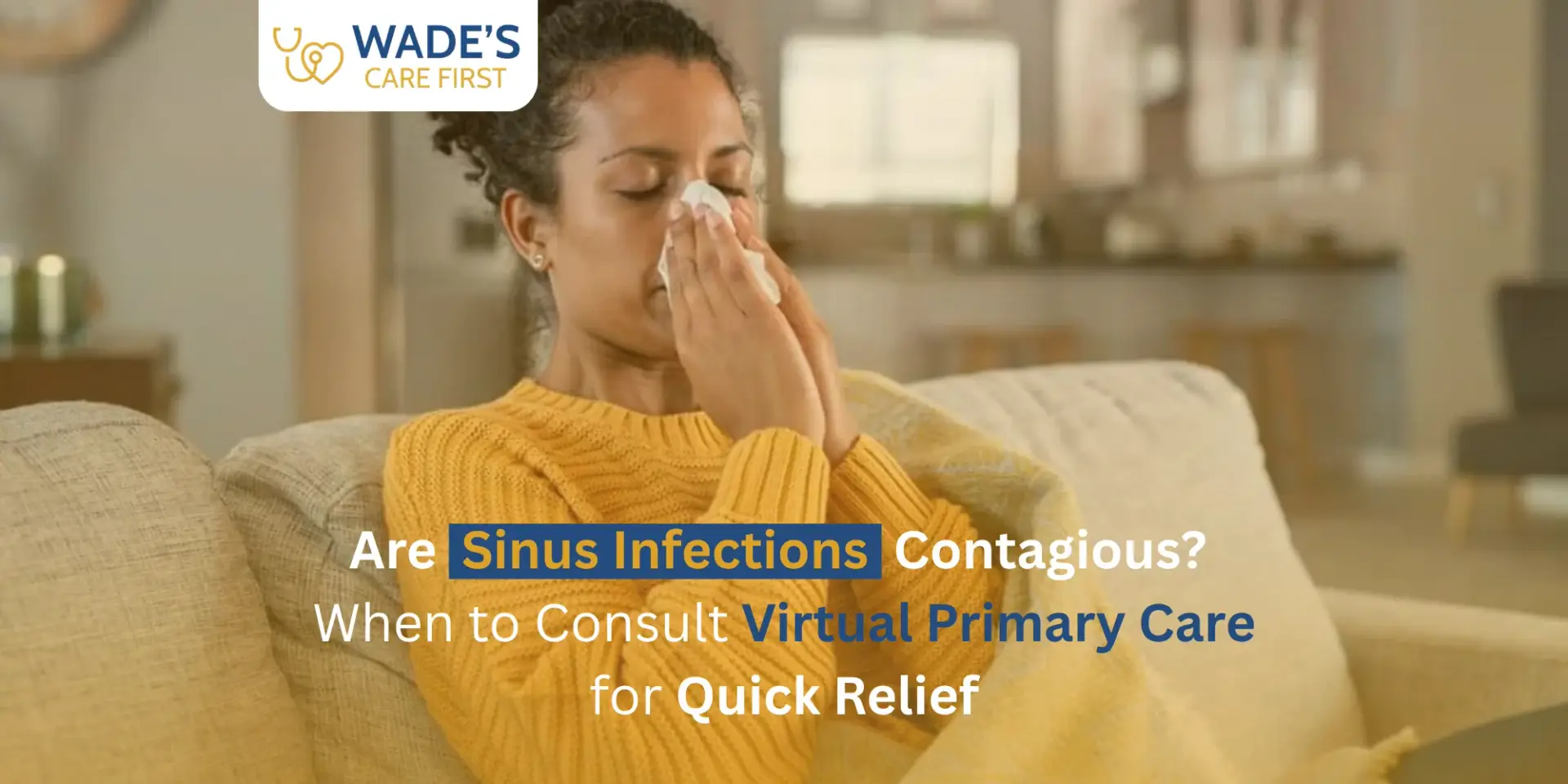
Day nine of facial pressure, and the question stops being about the sinus infection itself. It starts being about whether it’s safe to go back to the office, hug your kids, or sit next to someone on a plane.
It’s a reasonable worry! The short answer? It depends entirely on what’s actually causing the infection. Many people wonder, “Is sinusitis contagious?” but few are told that the answer depends on whether your case is viral or bacterial. Let’s clear it up.
It Depends Which Kind You Actually Have
Understanding what causes sinus infections helps clarify how they spread. Sinus infections split into two main categories that behave completely differently:
- A respiratory virus that causes sinus symptoms can spread between people. Transmission depends on the virus and the illness; symptoms alone do not establish when someone is no longer contagious.
- Bacterial sinusitis is not usually passed directly from person to person, but a concurrent respiratory infection can still spread.
How to Tell Them Apart
When figuring out how do you get a sinus infection, it often comes with just having a relatively simple cold virus.
Most sinus infections start that way, and the combination of congestion, facial pressure, and thick drainage is typical cold fare for at least a week or so.
So, is a sinus infection viral or bacterial? Recognizing the signs of bacterial sinus infection involves watching for specific patterns.
- The Double Sick Pattern. Symptoms that resolve for a few days, only to flare up again more noticeably.
- Late-Onset Fever. A fever that develops after day five vs immediately at the onset.
- Unilateral Facial Pain. Heavy focus on one area of the facial region as opposed to across both sides.
- Symptoms that persist beyond 10 days without improvement, worsen after initially improving, or are severe warrant assessment. These patterns can suggest bacterial sinusitis but do not confirm it on their own.
Although none of these signs are definitive on their own, as a group they paint a clear picture for health care providers.
The Contagious Window (At a Glance)
| Type of Infection | Contagious? | Timeline / Notes |
| Viral Sinusitis | Yes | Most contagious during the first 3 to 5 days; tapers off as symptoms shift to lingering congestion. |
| Bacterial Sinusitis | No | Not usually spread directly; a concurrent respiratory infection may still spread. |
| Fungal Sinusitis | No | Rare; usually only affects people with severely weakened immune systems. |
Contagiousness depends on the underlying infection and symptoms, not a fixed number of days. For a respiratory illness, resume usual activities when symptoms are improving overall and you have been fever-free for at least 24 hours without fever-reducing medicine; take extra precautions for the next five days.
Why So Many Sinus Infections Get Treated Wrong
A huge share of sinus infections are viral – and antibiotics do absolutely nothing for a virus.
Despite this, antibiotics are prescribed constantly for sinus symptoms that were never going to respond to them.
Overprescribing antibiotics contributes to resistance and can give you unnecessary side effects for a medication that won’t help your symptoms.
What Actually Helps While It Runs Its Course
If you’re waiting out a virus, skip the unnecessary antibiotics and focus on what actually works:
- Saline irrigation may help symptoms. Use distilled or sterile water, or water that has been boiled and cooled, and follow the device’s cleaning instructions.
- Steam & Hot Showers. Excellent for loosening deep congestion, particularly before bed.
- Hydration, Hydration, Hydration. Thinner mucus drains much more easily than thick mucus.
- Decongestants: follow the specific product label and ask a clinician or pharmacist about suitability. Overusing some nasal decongestant sprays can cause rebound congestion; oral products have different precautions.
- Rest. Sounds obvious, but it’s the step most people skip.
When Virtual Primary Care Makes Sense
Most straightforward sinus infections are tailor-made for telehealth.
A provider can:
- Review a symptom timeline
- Ask the appropriate diagnostic questions
- Provide a good supportive care plan (or prescribe antibiotics if your pattern indicates a bacterial cause) during a virtual visit.
The best part: you get answers without waiting in a packed waiting room.
When Should You Get In-Person Care Instead
Seek immediate, in-person medical evaluation if you experience severe sinus infection symptoms or red flags such as:
- High fever
- Sudden vision changes or double vision
- Significant swelling or redness around the eyes
- A severe headache unlike anything typical for a sinus infection
Patients often worry about how to tell if sinus infection has spread to brain or caused other serious issues. While extreme complications like intracranial spreading are extraordinarily rare, these severe red flags signal that you need a direct physical exam rather than a virtual consult.
Sinus symptoms dragging on? Get answers without leaving the couch.
Wade’s Care First offers same-day telehealth appointments (subject to current scheduling availability) across eight active states for sinus infections, colds, and other common illnesses.
Most major insurance plans are accepted, including Original Medicare (Indiana only), Medicaid (Indiana and Illinois only), UnitedHealthcare, Aetna, Humana, and Cigna.
Book your visit today at wadescarefirst.com
Answers connected to this topic.
How do you decide if sinus symptoms need antibiotics?
Duration, severity and symptom pattern matter. Many sinus infections are viral and improve without antibiotics.
Can you reassess an illness if my symptoms worsen after a video visit?
Yes, but rapidly worsening or severe symptoms should be evaluated promptly in person rather than waiting for a routine follow-up.
What types of symptoms require an in-person evaluation?
Symptoms that need a hands-on exam, imaging right away, stitches, a procedure or close monitoring. Examples include a possible broken bone, a deep cut, severe abdominal pain and some pelvic symptoms.