On this page
Telehealth care is available in Arizona, Florida, Illinois, Indiana, Kentucky, Michigan, Nevada, and New York. You must be in your selected state during the visit.
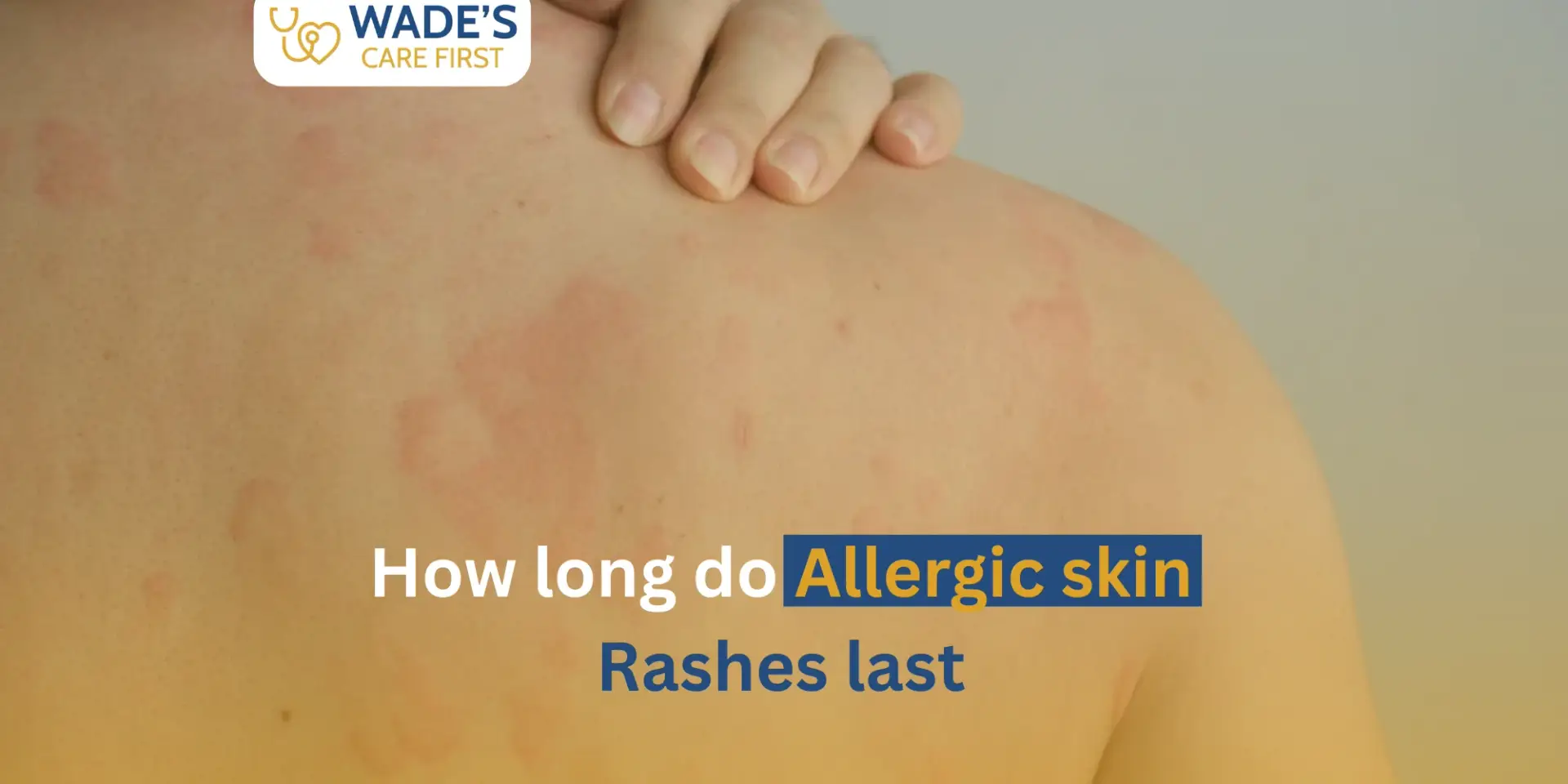
You wake up, and you have a reddish, itchy spot on your arm. Perhaps it occurred through the application of a new lotion, or trying new food, or exposure to the outside air.
The question you are now asking yourself is – how long is this one going to last?
The honest answer: it depends. Allergic skin rashes have no time-span.
What Is an Allergic Skin Rash?
The skin rash is the response of your immune system against something that it does not favor.
The body perceives a danger signal and reacts to the stimulating material. That response is shown on your skin as being reddened, swollen, itchy, or having hives.
Because there are two forms, one ought to be aware of:
- Contact dermatitis – occurs when your skin is in direct contact with an irritant or an allergen – can happen with poison ivy, nickel jewelry, or some skincare products
- Hives (also can be urticaria) – raised, itchy welts that may occur in any part of the body – commonly due to food, medication or stress
Contact dermatitis may be allergic or irritant, and hives may have allergic or nonallergic causes. The pattern and history help guide evaluation.
But How Long Does It Last?
Here’s a general breakdown:
- Mild contact dermatitis: 2-4 weeks when you take the trigger and leave it to be.
- An individual hive usually clears within 24 hours, but new hives can continue to appear. The duration of the overall episode depends on its cause.
- Chronic hives: May appear and disappear in weeks, months, or even longer.
- Exacerbation of allergic eczema: Varies – days to several weeks with/without treatment.
The key factor? The presence of the trigger. By continuing to use the product that gave you the rash, you are not giving your skin a chance to heal.
What Slows Down Recovery?
There are a few things likely to lengthen a rash unnecessarily:
- Scratching – it brings bacteria and aggravates the inflammation
- Further exposure to the allergen
- Application of the incorrect topical agent on an already irritated skin
- A skin condition underlying reactions that are more severe
Ways to Make Your Skin Heal Faster
These steps can help to recover after you have identified and eliminated the trigger:
- Cool compresses – This will minimize itching and swelling and will not irritate the skin
- Fragrance-free moisturizers – Retain the skin barrier, as the skin heals
- OTC antihistamines – Itchy and slight hive reactions can be soothed
- Hydrocortisone cream (1%) – Can be used on small areas on a short-term basis
- Light and airy garments – Lessens friction on painful skin
What you want to avoid:
- Hot showers
- Anything that contains alcohol or strong perfumes when the rash is still present
When Is It Time to See a Provider?
The majority of the mild rashes heal on their own. But there are those times when you cannot wait it out:
- The rash is spreading at an accelerated rate or consuming a large region
- Call 911 for swelling involving the tongue or throat, trouble breathing or swallowing, or fainting. Other facial swelling still needs prompt assessment.
- The rash is not improving
- You do not know what made you do it, and it just returns
- It has oozing, crusting or infection
These are the indicators that there is more than meets the eye – and that a custom-made analysis can actually pay off.
Get In Touch
Be it a recurring rash, a reaction you cannot identify, or you just want to know what is happening to your skin, Charles Wade, FNP-BC at Wade’s Care First, will take the time to get to know you and formulate a plan that will help.
Check the scheduler for available appointments, including same-day openings when offered; reach out today.
Frequently Asked Questions
Can an allergic rash last for months?
Some recurring or persistent skin conditions can last for months. An ongoing rash needs evaluation to identify the cause and review treatment; not every rash is an allergy.
Can stress make a skin rash worse?
Stress can worsen some skin conditions. Skin-care products, medications and other triggers may also matter, so persistent symptoms deserve a review.
Answers connected to this topic.
What should I do about a rash after starting a new medication?
Contact a clinician promptly. Fever, widespread blistering, mouth sores, facial swelling or breathing difficulty can signal a serious reaction and require urgent or emergency care.
Can mild insect bites or minor skin reactions be reviewed?
Yes. Clear photos may help determine whether supportive care, medication or in-person assessment is warranted. Rapid swelling or breathing symptoms require emergency care.