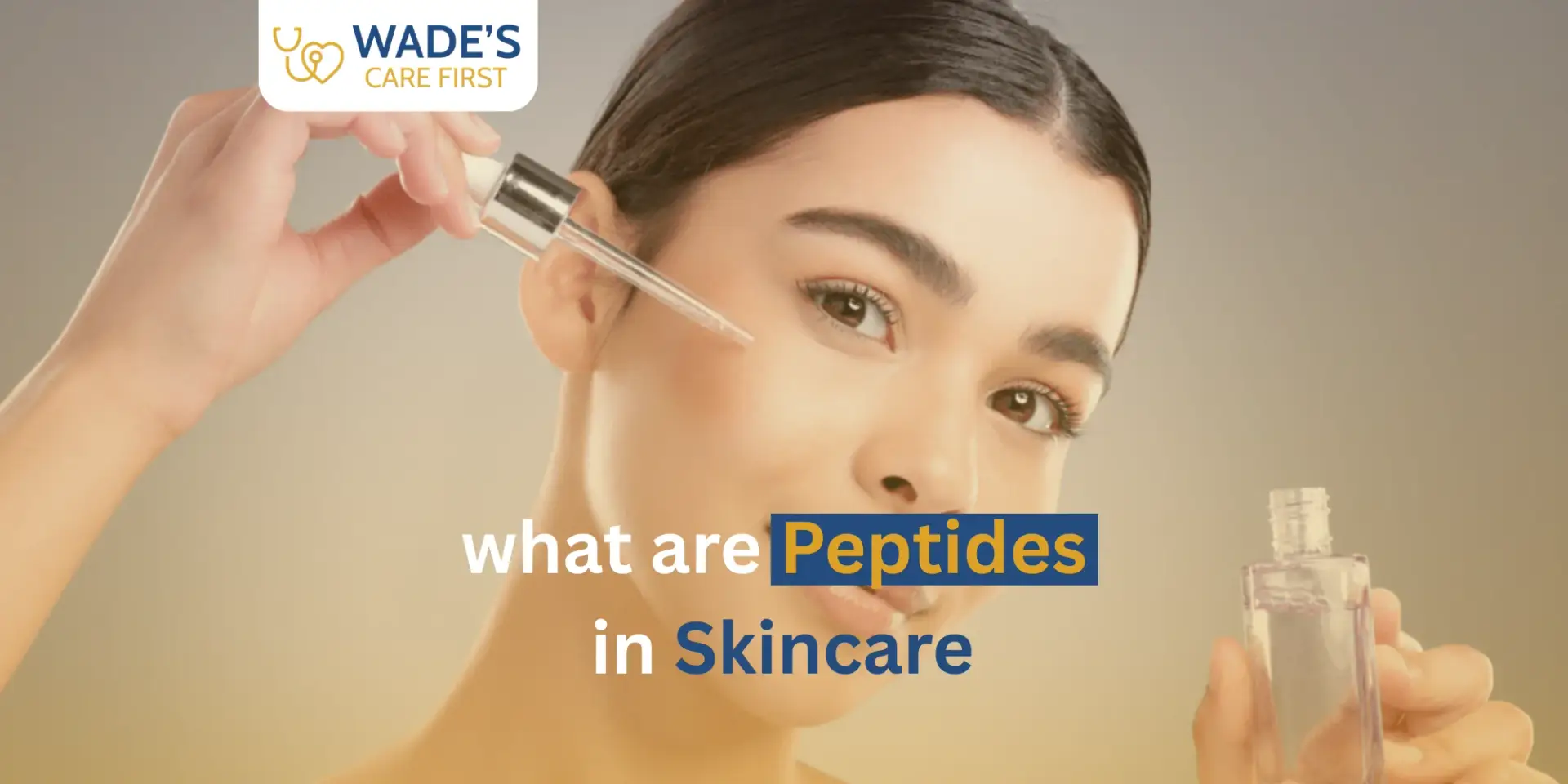
Peptides in skincare are everywhere right now. Every other serum has them on the label. But most brands just list the word and expect you to be impressed without actually telling you what they do or why they are in there.
So let’s actually talk about it.
What Are Peptides in Skincare?
Your skin is mostly made of collagen. Collagen is a protein. Proteins are built from chains of amino acids, and peptides are short pieces of those chains.
When collagen in your skin breaks down naturally over time, it leaves behind small fragments. Your skin recognizes those fragments as a sign that something needs to be repaired and responds by making more collagen. Peptides for skincare mimic those same fragments. They send that same repair signal to your skin cells, prompting production without waiting for breakdown to happen first.
That is it. That is the core idea.
Why This Matters as You Get Older
In your twenties, your body makes collagen consistently and your skin shows it. Firm, bouncy, recovers quickly. Around your mid-twenties, collagen production starts slowing down. It is gradual at first and then you start noticing it in the mirror.
Sun exposure accelerates the process significantly. So does smoking. So does poor sleep over long periods of time. As collagen breaks down the skin loses the structure underneath it and that is when lines deepen, skin starts to thin, and the face loses that fullness it had before.
Peptides and skin health are closely tied for this exact reason. Peptides for skin care are one of the more practical tools for slowing that down and supporting the skin in maintaining what it still has.
Not All Peptides Do the Same Thing
This is where it gets a little more specific and where a lot of the confusion comes from. Peptides is a broad category and different ones work in different ways.
Signal peptides
These are the most common ones in skincare products. They communicate directly with skin cells and tell them to produce more collagen and elastin. The skin receives the message and responds. Matrixyl is one of the most studied signal peptides and shows up in a lot of well-known serums.
Carrier peptides
These transport minerals like copper into the skin. Copper plays a real role in collagen production and wound healing but it needs a delivery vehicle to get deep enough to be useful. Carrier peptides do that job.
Neurotransmitter peptides
These are the ones that are sometimes touted as a natural botox alternative. This is an oversell, but the mechanism is real. They operate by diminishing the severity of repeated facial muscle contractions. When it comes to peptides and wrinkles, this type is particularly relevant. With time, the same muscle activity creates deeper expression lines. These are not movement-abolishing peptides, but rather those that can attenuate the pattern with repeated administration over time.
Enzyme-inhibiting peptides
Rather than pushing the skin to generate more collagen, these guard existing collagen through inhibiting enzymes that break it down. Consider them for preservation instead of production. This is one clear benefit of peptides that does not get talked about enough.
Why Peptides Actually Get Into Your Skin
Many ingredients that sound fantastic in theory cannot actually cross the skin barrier. That layer is there just to keep things out.
Peptides and skin absorption work well together because peptides are small and structured in such a way that they can breach that barrier and penetrate the dermis where collagen actually resides. That is what makes them a genuinely useful skin repair peptide ingredient rather than merely a surface-level one.
Not only what is in a product matters but also how a product is formulated. Aim for peptides that are listed higher up on the ingredient list, not buried at the bottom where they will be in such small amounts as to make no difference.
What Goes Well With Peptides
One of the major reasons that peptides for skincare are easy to start including in your routine is that they play nicely with other assets and don’t really compete against them.
It also keeps moisture in the skin and absorbs hyaluronic acid. Peptides add another dimension, so now you are tackling the hydration and structure simultaneously. There are already plenty of peptide serums out there that have it in themselves.
Niacinamide does it for pore size, redness, and oil balance. It totally does not interfere with peptides at all and the pairing works well for most skin types.
Unlike peptides, the mechanism of action of vitamin C to help collagen is an entirely different pathway. Which means you are coming at the same goal from two sides, using both. Vitamin C in the morning and peptides at night – there are no major incompatibilities.
Retinol is one of the most trusted skin revitalizing ingredients there is, and it complements peptides instead of working against them. Others do each in the same routine. Others alternate nights. Either approach works.
What Peptides Will Not Do
This part matters because the marketing goes too far sometimes.
Peptides will not erase deep lines that have been set for years. They are not a replacement for botox, fillers, laser treatments, or prescription retinoids. They work slowly, over months of consistent use, and they work best as something you maintain rather than something you reach for after the fact.
They also will not protect you from the sun. SPF every day is still the single most important thing you can do for your skin long term. No serum fixes what ongoing UV damage keeps causing.
Who Benefits From Using Them
So are peptides good for skin? Yes, and for most skin types at that. They are not acidic, not exfoliating, and rarely irritate. That makes them genuinely accessible, especially for people who find stronger actives too harsh. This is a big part of why peptides are good for skin across such a wide range of people.
People who tend to get the most from them:
- Anyone in their late twenties or older who wants to get ahead of collagen loss
- Sensitive skin types who struggle with retinol or acids
- People already using retinol who want to add another layer of support
- Anyone noticing early firmness changes or fine lines starting to form
- Skin that is dealing with dullness or the early signs of sun damage
Related: How to Tighten Skin After Weight Loss Naturally
How to Use Them
Apply after cleansing, before your moisturizer. Let the serum sit and absorb for about thirty to sixty seconds before you layer anything over it.
A few practical things worth knowing:
- Consistency matters more than anything else with peptides. Daily use over several months is what produces results, not heavy use for two weeks
- Store them away from heat and direct light since peptides can break down with prolonged exposure to both
- If the product has changed color or smell since you opened it, the actives are likely degraded
When Skincare Alone Is Not Enough
Over-the-counter products handle a lot but they have limits. Persistent acne, significant hyperpigmentation, rosacea, sudden skin changes, or anything that has not responded to products after giving them a real chance, those situations call for a clinical conversation.
Understanding what does peptide do for your skin is a good start, and so is knowing the peptide for skin health more broadly. But when products are not moving the needle, professional guidance is the next step.
At Wade’s Care First, dermatology is part of our virtual care offering. Same-day appointments are available across multiple states and you do not need to leave your house to get an actual clinical opinion on what your skin needs.
Get culturally-sensitive care.
If your skin has been bothering you and products alone are not cutting it, we can help you figure out what is actually going on.
Book a same-day virtual appointment at wadescarefirst.com today.