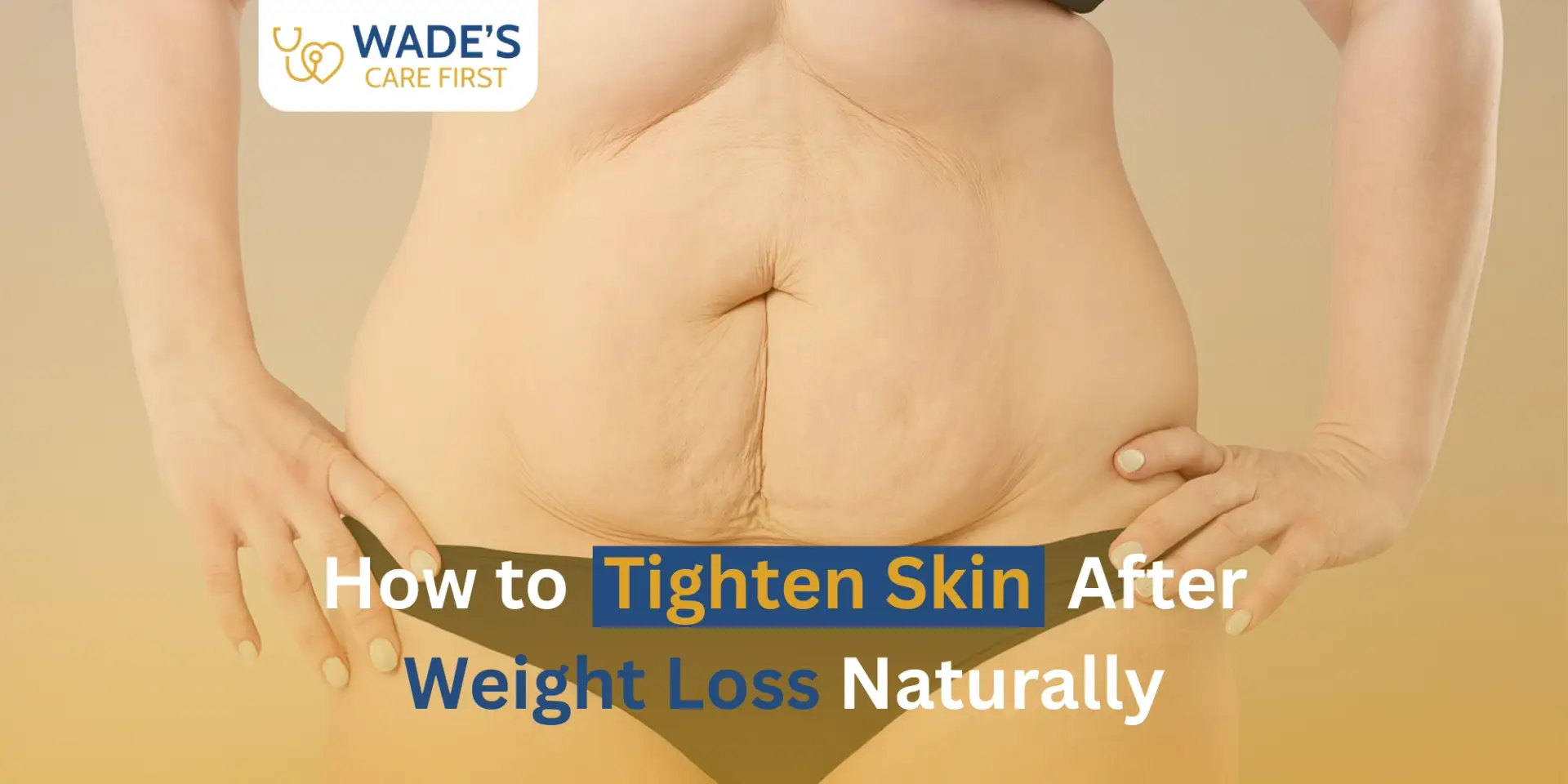
You put in the work. Lost the weight. And now there’s loose skin. Here’s what’s actually going on and what you can realistically do about it.
Loose skin after weight loss is one of those things nobody really warns you about.
You spend months working toward a goal, hit it and then feel like the finish line moved.
The skin that stretched to accommodate extra weight doesn’t automatically spring back.
For some people it’s barely noticeable. For others – especially after significant or rapid weight loss, it’s a real source of frustration.
The good news is that skin has more capacity to adapt than most people realize. The less good news is that it takes time, consistency, and some understanding of what actually helps versus what’s just marketing.
This post covers the honest version: why skin loses elasticity, what naturally supports recovery, and what factors determine how much improvement is actually possible. If you lost weight with medical support and want to understand the skin side of that process, this is for you.
Why Skin Gets Loose in the First Place
The skin is elastic in nature. It is straining and stretching. The collagen and elastin are the two proteins that are interwoven through the deeper layers of skin which then provide it with strength and flexibility.
When you have excess weight, the skin stretches to fit the weight.
With age, a few of those strands of collagen and elastin become stretched to the extent that they no longer recoil.
Imagine a long-overstretched rubber band. Draw it in, and it is not as round as it was.
As soon as the weight is lost, in particular, rapidly, the stretched-out skin does not automatically accompany it.
The fat under that was giving volume, has disappeared and the skin structure did not have time to shrink.
What affects how much skin loosens
- How long you carried the extra weight. A decade of stretched skin has more opportunity to remodel structurally compared to a year of stretched skin.
- Weight loss. Greater weight loss will result in additional loose skin. It’s just that there was a greater surface area that needed to stretch.
- How quickly the weight was lost. Gradual, slow loss provides skin with more time to adapt. Sudden weight loss, be it through crash dieting or surgery, is more difficult for the skin to keep pace.
- Age. The amount of collagen and elastin that is produced by the skin is naturally decreases as you become older. The results of losing the same weight by a 55-year-old and a 25-year-old will be significantly different.
- Genetics. Other individuals simply bounce back better. The thickness of the skin, the collagen production in the baselines, and the elasticity are all in part genetic.
- History of sun damage and smoking. They both damage collagen and elastin with time and slow the healing process of the skin.
None of these factors mean improvement isn’t possible. They mean the realistic timeline and degree of change will vary person to person.
Skin remodeling is slow. Most people see meaningful change over 12 to 24 months after weight stabilizes, not in the first few weeks.
Protein: The Most Important Dietary Factor
Collagen is a protein. Building and maintaining it requires adequate protein intake. This is one of the most direct dietary connections between what you eat and how your skin recovers, and it’s also one of the most commonly overlooked parts of a weight loss plan.
Most people cutting calories end up under-eating protein. That’s a problem both for muscle preservation and skin health. Without enough amino acids coming in, your body has less raw material for collagen synthesis.
How much protein is enough
General guidance for people actively working on body composition tends to land between 0.7 and 1 gram of protein per pound of body weight. If you’re sedentary, lower end. If you’re strength training, higher end.
What sources matter less than hitting the number. Chicken, fish, eggs, Greek yogurt, cottage cheese, legumes, protein shakes if needed. The goal is consistency over weeks and months, not one high-protein day.
Strength Training
This is the one that moves the needle most visibly. Muscle takes up space under skin. When fat leaves and nothing replaces the volume, skin hangs. Building muscle fills some of that space back in and gives skin something to lie against.
That’s not the only benefit. Resistance training also stimulates collagen production in connective tissue and improves circulation to skin, both of which support recovery.
What to focus on
- Compound movements: squats, deadlifts, rows, presses. These recruit the most muscle mass and produce the most overall stimulus for growth.
- Progressive overload over time – meaning gradually increasing the challenge so muscles continue to adapt. This is more important than any specific program.
- Consistency across months – not weeks. Muscle building is measured in months. You won’t see meaningful change in two weeks but you will in six months.
- Frequency matters more than duration. Three to four sessions per week of 45 minutes beats one long session done occasionally.
People who were physically active before or during weight loss tend to have better skin outcomes than those who lost weight through diet alone.
The combination of preserved muscle mass and the training stimulus makes a real difference.
Hydration and Skin Health
Your skin is like 64% water. Dehydrated skin loses elasticity and looks more loose and crepey than it actually is.
Adequate hydration doesn’t tighten structurally loose skin, but it does affect how skin looks and feels day to day and it supports the cellular processes that are actually involved in collagen production.
Most adults are reasonably well hydrated on somewhere between 2 and 3 liters of water per day – more if they’re active or in hot climates.
The practical check is urine color: pale yellow is fine, dark yellow consistently means you’re under-hydrated.
Alcohol and high sodium intake both contribute to water retention and skin dullness. Neither directly causes loose skin but both get in the way of skin looking its best.
What You Put on Your Skin
There is a real but limited role for topical products. They are able to enhance the skin surface and look of the skin and help keep the skin hydrated, but they cannot reorganize collagen externally. Realizing that difference helps to save money and avoid disappointment.
Ingredients worth using
- Retinoids (retinol or tretinoin). Over-the-counter retinol, tretinoin prescription. They both promote cell renewal and collagen synthesis. Tretinoin possesses better evidence base. The initial irritation of the skin is typical; begin with a low concentration, with a few nights per week and increase.
- Vitamin C serums. The active form is L-ascorbic acid. Vitamin C is also a collagen-forming cofactor as well as an antioxidant which helps prevent the breakdown of collagen. Formulation is important; seek concentrations of 10- 20% and packaging that does not expose it to light and air.
- Hyaluronic acid. Squeezes water into the skin and holds it in place. Does not rebuild collagen but greatly enhances the appearance and feel of the skin. Apply to slightly damp skin and cover with a moisturizer to work best.
- Peptides. Stimulate more collagen production in the skin.
Daily habits that compound over time
- Sunscreen every day. The largest contributor to collagen breakdown, other than the actual aging process is UV exposure. Wearing an SPF of 30 or more that is regularly applied really counts.
- Moisturizing daily. Maintains the skin barrier and minimises the apparent impact of dehydration.
- Massage or dry brushing. Enhances blood flow to the skin and could help lymphatic drainage.
Sleep and Stress
It is during sleep that the skin heals and regenerates. Pulsed release of human growth hormone, which is involved in collagen production, occurs in deep sleep. This is dulled by chronic sleep deprivation, and it is visibly manifested through the quality of skin as time passes.
The stress hormone, cortisol, degrades collagen. Chronically elevated cortisol from poor sleep, high stress, or under-eating does real structural damage to skin over time. This is one reason people who lose weight through aggressive restriction without managing stress often have worse skin outcomes than those who lose more slowly with better overall health habits.
Neither sleep nor stress management is a quick fix. Both compound over months. Getting consistent sleep and keeping stress reasonable does more for skin over a year than most topical products.
How Long Does This Actually Take
Realistic timelines matter because unrealistic ones lead people to give up before the process has had a chance to work.
Skin remodeling after significant weight loss is typically measured in one to two years, not weeks. This is true for people doing everything right. The skin has to structurally adapt, which requires collagen turnover that happens on its own slow timeline regardless of what you do to support it.
The factors that speed things up: younger age, slower rate of original weight loss, strength training throughout the process, adequate protein, no smoking, consistent sun protection. The factors that slow things down are the inverses of those.
When you’ve done everything and skin is still an issue
Some degree of loose skin after significant weight loss doesn’t fully resolve with natural approaches. After 18 to 24 months of stable weight, consistent training, and good nutrition, what remains is likely what remains. At that point, the options are cosmetic procedures such as radiofrequency skin tightening, ultrasound treatments, or surgical skin removal for larger amounts of excess skin. Those are conversations for a dermatologist or plastic surgeon.
This post is specifically about what’s possible naturally.
A NOTE ON RAPID WEIGHT LOSS – If you lost weight quickly especially with GLP-1 medications – the timeline for skin adaptation is often longer because the loss happened faster than skin could track. That doesn’t mean natural approaches won’t work – it means giving the process more time before drawing conclusions.
The Role Your Provider Plays in This
Skin outcomes after weight loss aren’t separate from the weight loss plan itself. How fast you lose, how much muscle you preserve, how well your nutrition is managed, all of these directly affect what your skin does afterward.
At Wade’s Care First, Charles Wade FNP-BC works with patients on medical weight loss that includes the lifestyle side of the equation, not just the medication. That means:
- Protein targets
- Activity guidance
- Follow-up that adjusts the plan as your body changes
If you’ve lost weight and are dealing with loose skin or if you’re in the process of losing and want to do it in a way that gives your skin the best chance, that’s a conversation worth having. Telehealth appointments are available across multiple states, same-day appointments included.
Working on Weight Loss and Want a Plan That Accounts for the Whole Picture?
Charles Wade FNP-BC offers medical weight loss that goes beyond the prescription. Get culturally-sensitive care today.
Same-day appointments available in many states.
Book an appointment: wadescarefirst.com