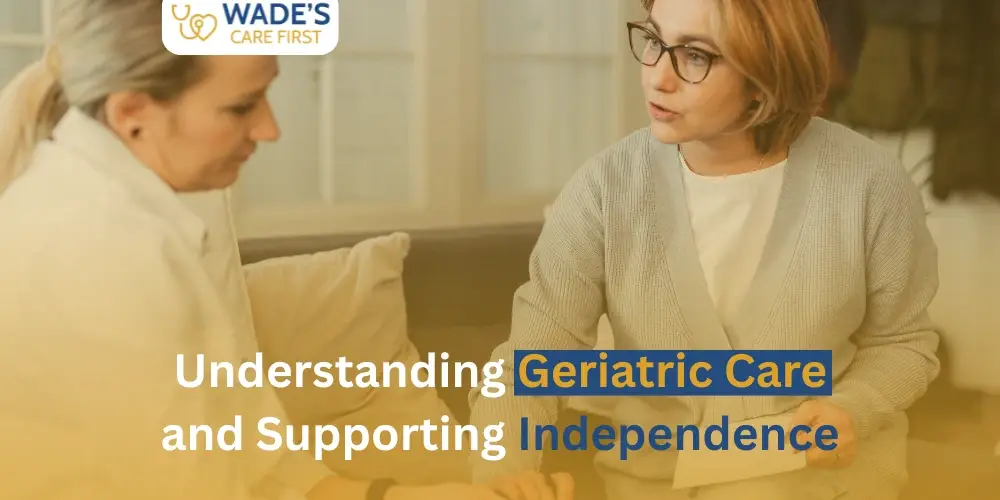
Aging can bring about new and challenging changes physically, emotionally, and cognitively.
With age, a person may involuntarily lose their physical capabilities and, eventually, their sense of control, which can be detrimental to their emotional and psychological well-being.
For family members, appreciating the specialty of geriatric care can ease the transitions involved.
Geriatric care is not about taking control away from the individual; rather, it is about care that fosters the oldest old to keep control.
What Is Geriatric Care, Really?
The definition of geriatric care is healthcare focused on the elderly, commonly those 65 years and up.
It is not about treating individual symptoms.
- It is about treating the whole person.
- It is about the interaction of multiple chronic diseases.
- It is about the impact of medications on one’s cognition and mood.
- It is about the relation between one’s physical health and psychological well-being.
One of the greatest misconceptions is that geriatric care is only for people who are gravely ill.
The truth is that geriatric care is most beneficial when applied early, before small changes develop into bigger changes.
Differentiating Factors from Typical Primary Care
While regular primary care serves most adults well, aging patients tend to see a particular set of intersecting complexities. An effective geriatric care provider looks at:
- Polypharmacy risk
- Cognitive screening is vital in the early detection of conditions such as dementiaand Mild Cognitive Impairment
- Functional evaluations of one’s capability to execute the Activities of Daily Living
- The psychosocial dimension, including social isolation and grief, transformations in one’s sense of self due to aging, and the complicating role of psychiatric issues
The Psychological Significance of Supporting Autonomy
Research in health psychology offers compelling evidence for the association between feeling in control, quality of life, and emotional wellness, especially in older people.
When older adults are the recipients of a lot of care without their active involvement, this concern tends to aggravate psychological distress and can lead to a rapid spiral decline in health.
Supporting independence in older adults is important.
Dementia Care and Promotion of Autonomy
At Wade’s Care First, shared decision-making is the foundation for the partnership model in care for geriatric patients.
It is where the provider and the patient collaboratively develop a plan in line with the patient’s values, in addition to the clinical diagnosis.
Below are practical examples:
- Goal-oriented collaboration – Establishing what is most substantial to the patient, in which they want to continue living in their own house, relieving pain, or improving the quality of their sleep
- Reviewing medications – Making sure to review medications to potentially identify those that are no longer necessary and are causing a cognitive decline, increased fatigue, or increased risk of falling
- Integrated mental health – Instead of treating anxiety, depression and bereavement as separate issues, the mental health of patients is integrated into the routine care of the elderly
- Caregiver collaboration – Engaging in a conversation with the family members of the elderly patients while remaining patient-centered
The Importance of Preventive Care in Healthy Aging
Waiting for an issue to arise and then providing healthcare is an approach that many people use, and it is an expensive one.
In contrast, issues can be identified and dealt with easily in the beginning stages if regular preventative healthcare is utilized, which includes healthcare related to cognitive decline, heart health, bone health, and nutrition.
Older adults who receive consistent and preventive care are likely to be confident that they can manage their own health, and this is a positive belief. This belief is protective.
It keeps people engaged in their own care and less likely to disengage from social and physical activity.
Next Steps
You and your loved ones don’t have to deal with the impact of aging on health alone.
Wade’s Care First is dedicated to providing goal-oriented, culturally sensitive, geriatric care.
Same-day appointments can be booked through our website.
The care plan you receive as you age should emphasize customizability, support your independence, protect your dignity, and enhance your overall health and wellness.
FAQs
At what age is someone considered geriatric?
Most healthcare professionals identify geriatric patients as being 65 and older.
Is geriatric care covered by insurance?
Yes, geriatric care is covered under Medicare and Medicaid, and Wade’s Care First works with several other major insurance carriers. Check our website or call to verify your insurance.