
Reviewed by Charles Wade, FNP-BC — Board-Certified Family Nurse Practitioner. For informational purposes only. Not a substitute for professional medical advice.
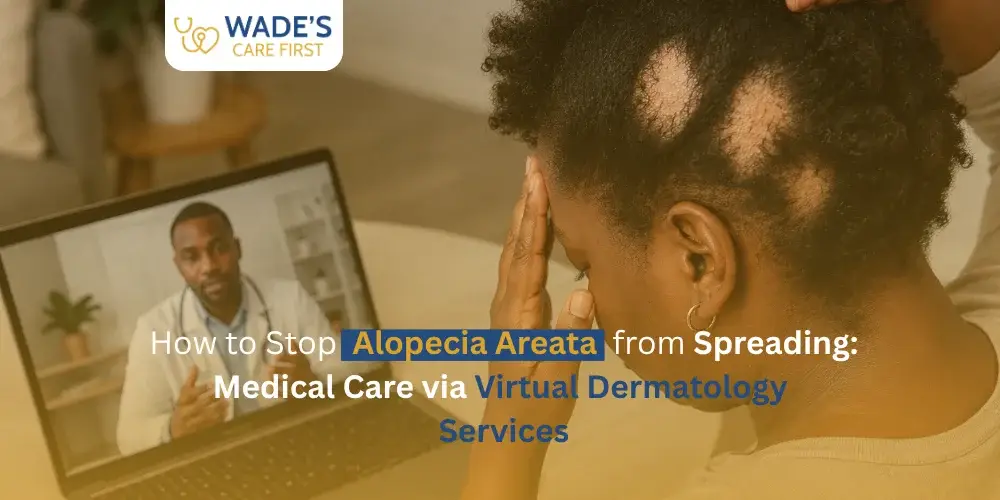
You notice a patch bald spot on head. Smooth, coin-shaped, where hair used to be. Sometimes it’s one. Sometimes more show up over the next few weeks and you start wondering how far this is going.
Alopecia areata doesn’t follow a predictable script. But getting treatment started early changes how it plays out for a lot of people, and a telehealth visit is enough to start that process.
What It Is
Alopecia areata is autoimmune disease hair loss. The immune system attacks the hair follicle and interrupts its growth cycle.
Since the follicles are not destroyed, it is possible for some hair regrowth to take place but additionally, if left unchecked ongoing autoimmune hair loss activity will continue to attack fresh hairs.
If you’re asking what causes alopecia hair loss, that immune misfiring is the answer. What causes alopecia in the first place isn’t fully understood, but genetics, stress, and other autoimmune conditions all play a role.
Common alopecia symptoms include:
- Smooth, round patches on the scalp
- Eyebrow thinning
- Hair loss elsewhere on the body
It affects around 2 percent of people at some point, can start at any age, and range from one small patch to widespread loss.
Why Starting Early Matters
The longer alopecia hair loss goes untreated, the more follicles get pulled in. Early alopecia treatment tries to interrupt that before more patches appear or existing ones grow.
People often ask ”is alopecia curable” and the honest answer is: not in the sense of a permanent fix, but alopecia areata can be treated effectively in most cases, especially when caught early. Spontaneous regrowth does happen. But watching and waiting means weeks of ongoing follicle inflammation with no treatment, and for anything beyond a single small patch, most dermatology guidelines lean toward treating early.
Treatments That Work
Intralesional corticosteroid injections directly into the bald spot on head are the most common first-line treatment for bald patches from alopecia areata. They suppress the local immune response and get the follicles moving again. Regrowth usually appears within four to eight weeks of the first injection.
Topical corticosteroids applied to the patches are the alternative when injections aren’t practical or when the area is too large. Less targeted but easier to apply consistently over time.
Topical minoxidil gets added alongside corticosteroids in a lot of cases to help stimulate growth during and after the inflammatory period.
For more widespread involvement, JAK inhibitors are now an option. Baricitinib and ritlecitinib both have FDA approval for moderate-to-severe alopecia areata. Ritlecitinib got its approval in 2023 specifically for this condition. They block the immune signaling pathway driving the follicle attack, are taken orally daily, and require monitoring. The clinical trial data on regrowth rates was meaningful enough to push them through approval.
What a Telehealth Visit Covers
For alopecia areata, a lot more is possible remotely than people assume.
Photos and video are enough to assess the pattern, extent, and activity of the patches. A provider can take history, rule out other causes of hair loss, and prescribe topical or oral treatments the same day. Intralesional injections need an in-person visit and a telehealth provider will coordinate that referral when injections are the right call.
- Reviewing photos and history to confirm the diagnosis
- Assessing how many patches and how active the process looks
- Prescribing topical corticosteroids and minoxidil
- Discussing systemic options for more widespread cases
- Coordinating referrals for injections or specialist care when needed
What Makes It Spread Faster
Stress is a documented trigger. It doesn’t cause the condition but it can set off flares and accelerate spreading in someone who already has it.
A sudden bald spot on headthat appears quickly is often stress-related. Alopecia areata in women can present differently than in men, frequently affecting the hairline and sometimes appearing as diffuse thinning rather than distinct patches, which makes it harder to recognize early.
Thyroid dysfunction commonly coexists with alopecia areata and, when it’s present and untreated, makes the hair loss harder to control. Thyroid levels are worth checking alongside treatment.
Atopic conditions, eczema, asthma, hay fever, show up more often in people with alopecia areata and are associated with a more active course. Family history of autoimmune conditions increases the chance of more extensive involvement.
Tracking Between Appointments
Photos taken consistently help track whether a bald spot on back of head or other patches are stable, expanding, or starting to fill in. Take them at the same angle every week or two. It gives the provider something concrete at follow-up rather than a vague description of how things seem.
New patches appearing in areas that weren’t affected before, or existing patches visibly growing, are reasons to reach out before the next scheduled visit.
Wade’s Care First
Charles Wade, FNP-BC, is a Board-Certified Family Nurse Practitioner offering virtual dermatology alongside primary care, mental health, weight loss, and urgent care across nine states. Same-day appointments are available. Most major insurance plans accepted.
If you’ve noticed patches and haven’t been seen yet, same-day telehealth is the fastest way to get something started.
Phone: 317.765.0603
Website: wadescarefirst.com
Book: Zocdoc or the patient portal
States: Arizona, Florida, Illinois, Indiana, Kentucky, Michigan, Nevada, New York, Texas
Disclaimer: Informational only. Not medical advice. Consult a qualified provider for diagnosis and treatment.