
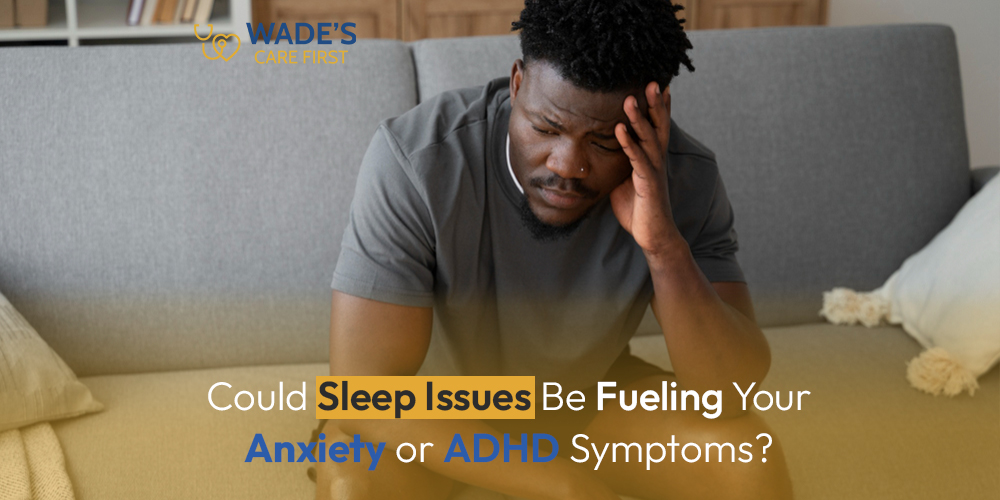
You wake up tired even after eight hours in bed. The day starts slow, your thoughts race, small things irritate you, also your focus slips just away. Tasks accumulate, and they feel unfinished.
For a lot of people, these signs point straight to anxiety or ADHD. But sometimes the real problem sits right under the surface. Poor sleep.
At Wade’s Care First, we see this connection every week. Charles Wade, FNP-BC, provides care that looks at the full picture.
Mental health, daily habits and your physical health. Do you know that all of it ties together?
When sleep stays poor, anxiety and ADHD symptoms often get louder. Fix the sleep and many people notice real improvement.
How Sleep Problems and Anxiety Feed Each Other
Anxiety does actually make it tough for one to fall asleep. Your mind keeps going over worries. The more you try to relax, the more awake you feel.
That tiredness makes the anxiety feel stronger the next day. Racing heart, tight chest, and constant what-if thoughts. It becomes a loop.
Without good rest, the brain has a harder time handling stress. Worry feels bigger. Emotions feel heavier. Even normal daily pressure starts to feel overwhelming.
The same thing happens in reverse. Bad sleep raises anxiety. One rough night can make the next day feel more tense. Two or three in a row and the effects build fast.
Related – How Can You Tell If Your Anxiety Is Actually Undiagnosed ADHD?
How Sleep Issues Make ADHD Symptoms Stronger
ADHD already brings challenges with attention. Impulse control. Starting and finishing tasks. When sleep gets short or broken the brain works even harder to stay on track.
People notice these changes most:
- Worse focus after a bad night. Everything distracts more.
- More fidgeting or restlessness from built-up fatigue.
- Bigger emotional reactions. Frustration comes quicker. Moods swing harder.
- Harder time getting organized or remembering what needs to be done.
In kids and teens, poor sleep can look like more behavior issues at school or home.
In adults:
- Lower productivity.
- Strained conversations.
- Feeling behind all the time.
Sleep does not cause ADHD. But it acts like gasoline on the symptoms. The core issues become manageable when rest is enhanced.
Related – How Do I Know If I Have Adult ADHD?
Day-to-Day Activities that Interfere with Sleep
Certain habits make sleep worse.
- Screens late at night.
- Caffeine too close to bed. It stays in your system.
- Irregular schedule. The varying bedtime on a night-to-night basis disorients your internal clock.
- Stress from the day carried into bedtime. Work thoughts. Family worries.
- Noise in the bedroom.
Get Better Sleep
Steady changes help most people.
- Go to bed and try to wake up at the same time every day.
- Start winding down about an hour before.
- Lower the lights, step away from screens. Read a good book or listen to calm music instead.
- Set up your bedroom just for sleep. Keep it cool. Make it dark. Keep it quiet.
- Stop caffeine by early afternoon. Avoid big or heavy meals close to bedtime.
- Get some movement in. Regular activity helps sleep come more easily. Just finish it a few hours before bed.
- Create a short bedtime wind-down. A few minutes of slow breathing. Gentle stretches. Anything that tells your body rest is coming.
- Write down your sleep for seven days. The time you go to bed, the time you wake, and how rested you feel. You will spot patterns quickly.
Get Professional Help
If sleep stays poor even after trying all these steps, or if anxiety and ADHD symptoms keep growing despite your efforts, extra support helps.
At Wade’s Care First, we provide culturally sensitive care. We offer full evaluation, diagnosis, and medication management when needed.
We look at sleep as part of the plan. We also check for things like sleep apnea or restless legs, if they might be involved.
If poor rest feels like it is making anxiety or ADHD harder, reach out today.
We provide same-day appointments in many states. Call Wade’s Care First or visit the site to schedule.
FAQs
Can better sleep really help anxiety or ADHD?
Yes. Many people see symptoms get noticeably lighter with consistent good rest. It is not a full cure. Though it helps a lot.
Do ADHD medications make sleep worse?
Some can. We review timing and dosage to find what works best for your body.
Should I see someone about sleep if nothing changes?
Yes. Ongoing trouble often needs a closer look. We can guide you through next steps.