
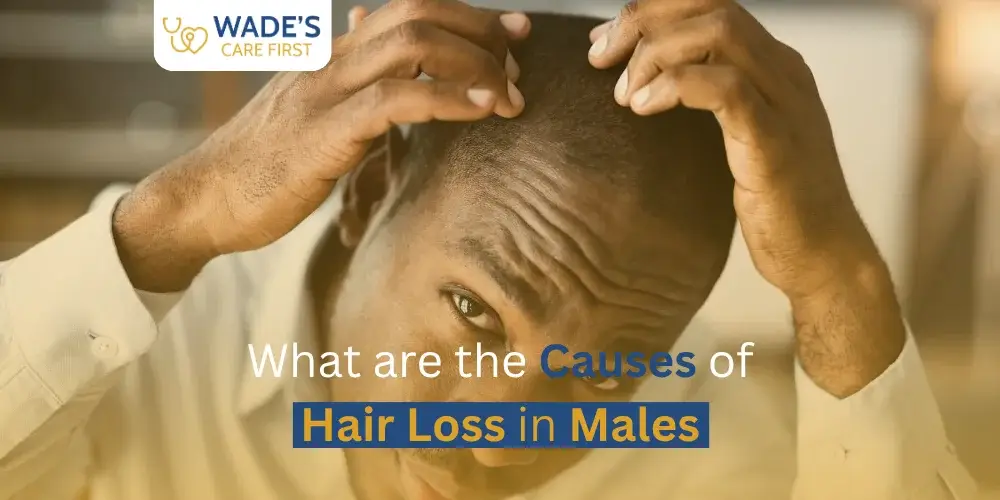
It’s the same for most men. The hairline is slightly further back than it used to be. The crown appears to be thinner in some lighting. There is more on the pillow than before. By the time it is noticed, it has most likely been going on for a while.
The presumption is that it is a genetic problem, and in some cases, it is. But there are other causes of male balding which most men are not aware of and some of those are totally reversible if caught early enough. The issue is, most men never discover what the one is they are dealing with, as they never ask.
Male Pattern Baldness
This is the image that most males have in mind when considering hair loss. It’s called androgenetic alopecia and is far more prevalent than any other medical condition. It is passed down through the generations, both from the mother and father’s side (contrary to popular belief), and is triggered by a hormone called DHT, which is a by-product of testosterone.
DHT eventually makes hair follicles smaller and smaller over time in men who have the genetic predisposition. The hairs they grow become thinner and shorter each cycle until they finally die off. The temples usually go first, then the crown, eventually connecting.
The part worth knowing is that this process is slow and the follicles are not gone in the early stages. They are miniaturized. Treatments that work on DHT work better the earlier they are started, which is why waiting until there is significant visible loss makes the options narrower than they would have been a few years before.
When Stress Sheds the Hair
Telogen effluvium is the type of hair loss that arrives as a shock because it comes weeks or months after whatever caused it. By then most men have forgotten the illness, the surgery, the stressful few months, the crash diet, and the connection never gets made.
What happens is that the hair growth cycle gets disrupted. A significant physical or psychological stress pushes a large proportion of hairs into the resting phase simultaneously. Two to three months later they all shed at once. Coming out in handfuls in the shower, on the pillow, everywhere. It is alarming enough that men assume the worst.
The good news is that telogen effluvium is largely reversible. Once the body stabilizes and the trigger resolves, the cycle resets. The bad news is that it can run on top of genetic hair loss and make it very difficult to know what is what without someone actually looking at the full picture.
What the Blood Work Sometimes Finds
Hair follicles are metabolically demanding. They need specific nutrients to function and when those nutrients drop, the follicles are one of the first places the body pulls from because hair is not essential to survival.
Iron is the most documented nutritional cause of hair loss and most men never get checked for it because it is associated with women. Ferritin specifically, which is the stored form of iron, can sit in a range that looks acceptable on a lab report and still be low enough to affect the hair cycle. The number matters, not just whether the result gets flagged.
Zinc, vitamin D, B12, protein intake, thyroid function. Any of these running low or out of range can show up in the hair before it shows up anywhere else. A man eating too little protein while trying to lose weight, or a man with undiagnosed hypothyroidism attributing his fatigue to work, may have been blaming genetics for something that had a different cause entirely.
Thyroid Problems
Both an underactive and overactive thyroid affect the hair cycle. The loss tends to be diffuse, spread across the scalp rather than concentrated at the temples or crown, which is a different pattern than genetic hair loss. It sometimes also affects the outer edges of the eyebrows.
Thyroid dysfunction usually comes with other signs. Fatigue, weight changes, feeling cold or hot when others are not. But those symptoms are easy to rationalize and men are less likely than women to connect them to something worth investigating. A blood test rules it in or out in one draw.
Scalp Issues That Get Missed
Sometimes the problem is not in the follicle at all but on the surface. Seborrheic dermatitis causes inflammation that affects follicle health over time. Fungal infections of the scalp cause patchy loss that gets assumed to be alopecia areata. Folliculitis, if it goes untreated long enough, causes scarring that permanently damages follicles.
These look different from genetic hair loss on examination. A man who has diagnosed himself with pattern baldness based on his own assessment may be looking at something else entirely that responds to completely different treatment.
Medications Nobody Thinks to Mention
Blood thinners, certain blood pressure medications, some antidepressants, cholesterol medications. Hair loss is a listed side effect of enough common medications that it is worth going through a medication list when the timing of loss lines up with starting something new. Most men do not make that connection and neither do a lot of providers unless someone specifically asks.
Alopecia Areata
This one is autoimmune. The immune system attacks the follicles and the result is patchy loss that appears suddenly, smooth round patches that show up without warning. It can affect the beard as well as the scalp. It is not the same condition as androgenetic alopecia, does not follow the same pattern, and does not respond to the same treatments. Getting the diagnosis right is the first requirement before any treatment makes sense.
Why Finding the Actual Cause Matters
Finasteride does not help telogen effluvium. Iron supplementation does not help male pattern baldness. A topical antifungal does not help alopecia areata. The treatments are different for each cause and treating the wrong thing wastes time and sometimes makes things worse.
Bloodwork covering ferritin, thyroid function, zinc, vitamin D, and B12 alongside an actual examination of the scalp and a real conversation about timing and history is what a useful evaluation looks like. It is not complicated. It just requires someone willing to do it rather than shrug and say this is probably genetic.
At Wade’s Care First, hair loss gets treated as something worth investigating rather than something to accept. Finding out what is actually driving it is where every useful conversation about options starts.