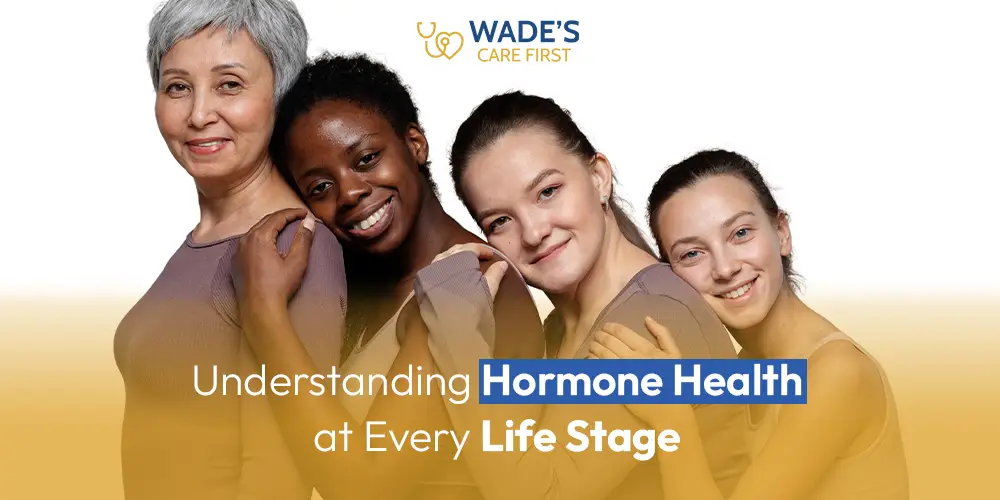
Hormones can actually do a lot. They affect how much energy you have, how well you sleep, your mood, and even how your weight sits.
As you get older, they can change. Those changes are normal. But it helps to know what’s coming so you can handle it better.
At Wade’s Care First, we handle women’s health in a straightforward way. Check-ups, birth control talks, menopause support, whatever you need.
Here’s what usually happens with hormones at different points in life.
Puberty and Your Teen Years
Things usually start moving between 8 and 13. Estrogen and progesterone pick up, and that sets off periods, breast development, and rapid growth in height. It’s a lot at once.
Acne shows up for many, periods are random, and moods swing hard.
You’ll probably see:
- Cycles that don’t follow any schedule yet
- Emotions hitting stronger than before
- Body changing shape fast
Eating decent food, moving around, and sleeping enough smooths it out some. Talking to someone who gets it makes the rest easier.
The Twenties and Thirties
By now, most women have a fairly regular cycle. Estrogen and progesterone keep things running. Periods, fertility, bone strength, steady energy.
Life gets full during these years, and stress or lack of sleep can throw the balance off, making periods heavier or energy lower.
A lot of women also figure out birth control here, and the type you choose can shift how hormones feel.
What helps keep it steady:
- Moving most days, nothing fancy, just regular
- Meals with real food, veggies, protein and good fats
- Decent sleep on a consistent schedule
Those basics add up more than people think.
Perimenopause
This usually starts in the 40s. Estrogen starts going up and down before it settles lower. Periods can get shorter, skip months, or come heavier. New things pop up for a lot of women.
Signs:
- Hot flashes
- Sleep getting patchy
- Mood or your focus feeling off
Everyone might go through it at their own pace. Some sail through, others feel every bump.
Menopause and After
You’re in menopause once you hit 12 months without a period.
Happens around age 51 on average. Estrogen stays low, which can affect bones, heart health, and comfort down there.
Once the shaky part is over, a lot of women say they feel more even-keeled.
This is when it pays to lock in habits for the long run:
- Lifting weights, do it a couple of times a week
- Eating for your heart and bone health
- Getting all your important screenings done
Easy moves that matter:
- Weight-bearing exercise a few days a week
- Enough calcium
- Vitamin D
- Important check-ups to catch anything early
Read more: What Health Priorities Change for Women Over 50?
Get Professional Support
At Wade’s Care First, we give culturally responsive care. We consider your background, beliefs and preferences in such a way that the plan fits in your life.
If changes have been on your mind or you just want to talk it through, give us a call and set up a visit.
Same-day appointments are available in four states:
- Indiana
- New York
- Arizona
- Florida
Get your appointment today!
FAQs
When’s a good time to see someone about hormone issues?
In case heavy periods, big mood swings or hot flushes begin to really affect your work or sleep, then come in. We can distinguish between what is normal and what is not.
Does what I eat and how I live really affect my hormones in any way?
It does. These can help:
- Steady sleep
- Healthy food
- Regular movement
What about hormone therapy?
It works well for some with tough symptoms. We go over the upsides, downsides, and other choices based on your situation.
How do you handle care for different cultural backgrounds?
We listen first and adjust the approach so it lines up with your values and what feels right for you.